Один великий учёный сказал, чтобы понять ортопедическую медицину, необходимо сначала понять анатомию, а чтобы понять анатомию, необходимо сначала изучить её историю и развитие..

Медицинские записи по анатомии начались с Гиппократа, знаменитого древнегреческого врача, который считал, что сердце имеет две камеры и две камеры.
One great scientist said, to understand orthopaedic medicine, one must first understand anatomy, and to understand anatomy, one must first understand its history and development. Medical records of anatomy began from Hippocrates, a famous ancient Greek doctor, who believed that the heart had two chambers and two chambers. Aristotle, another Greek scholar, did an animal dissection, suggesting that the heart is the center of blood circulation, and distinguishing nerves from tendons, but he mistakenly applied the results of animal dissection to the human body. And, ancient Greek medical scientist Herophilus, he found and named " duodenum," he named "prostate", "the ciliary body", "retina", "lacteal and lymphatic", studying the liver and pancreas, and female uterus and fallopian tubes. Galen's Classic of Medicine was an authoritative masterpiece of Western medicine before the 16th century. There were many anatomical records in the book, such as clear records of blood flow, nerve branches and other organs. However, because the information was mainly from animal anatomy, there were still many mistakes. From 15th to 16th century, European Renaissance period, anatomy has a vigorous development, such as Leonardo Da Vinci had studied more than 30 corpses, filling human body pipe with wax, thus proving that blood vessels originates from the heart. Also, the atlas of human bone anatomy he made was an epoch-making masterpiece. Andreas Vesalius was the founder of the modern anatomy, he personally engaged in human body anatomy, finally in 1543 published the "human body", which systematically corrects the errors of popular argument, creating a new way for the development of medicine. In the 17th century, William Harvey first proposed that the cardiovascular system is a closed system of pipes, which had a huge impact to make anatomy into an independent discipline. In the 19th century, Darwin's "Origin of Species", and other great works were published, which established a new theory about human origin and evolution, and made the exploration of human body morphology and structure. The influence of these masterpieces has been continued to this day. The invention of the Electron Microscope in the 20th century brought morphological research, reaching the cellular and subcellular levels and the molecular level. The development of morphological science is gradually expanded with the continuous progress of new technologies and the continuous appearance of innovative methods, forming three different stages marked by macroscopic anatomy, microscopic anatomy and ultrastructural anatomy. With the development of science and technology and the improvement of research methods, the application of X-ray in medicine keeps pace with the times. X-ray computed tomography drives the progress of the sectional anatomy. Morphological structure and mechanics principle is used to analyze the skeleton, the basis of the principle of fluid mechanics research of cardiovascular morphology is along with the development of medicine to put forward the new requirements of anatomy. As a leading medical implants company in China,Double Medical supply professional orthopedic surgical solutions, if you 're intested in more orthopaedic medicine knowledge, follow us and welcome to visit our website:www.doublemedicalgp.com.

Аристотель, другой греческий учёный, проводил вскрытие животных, предполагая, что сердце является центром кровообращения,, иразличал нервы и сухожилия,, но он ошибочно перенёс результаты вскрытия животных на человеческое тело..

А также древнегреческий учёный-медик Герофил обнаружил и назвал ” двенадцатиперстную кишку»,,он назвал ”предстательную железу», «“ресничное тело“, «сетчатку», «“ресничное тело“, «млечные сосуды и лимфатические сосуды“ресничное тело“, «», изучая“печень и поджелудочную железу, а также, матку и маточные трубы. «Труд по медицине» Галена был авторитетным шедевром западной медицины до XVI века. В книге содержалось множество анатомических записей, таких как.
One great scientist said, to understand orthopaedic medicine, one must first understand anatomy, and to understand anatomy, one must first understand its history and development. Medical records of anatomy began from Hippocrates, a famous ancient Greek doctor, who believed that the heart had two chambers and two chambers. Aristotle, another Greek scholar, did an animal dissection, suggesting that the heart is the center of blood circulation, and distinguishing nerves from tendons, but he mistakenly applied the results of animal dissection to the human body. And, ancient Greek medical scientist Herophilus, he found and named " duodenum," he named "prostate", "the ciliary body", "retina", "lacteal and lymphatic", studying the liver and pancreas, and female uterus and fallopian tubes. Galen's Classic of Medicine was an authoritative masterpiece of Western medicine before the 16th century. There were many anatomical records in the book, such as clear records of blood flow, nerve branches and other organs. However, because the information was mainly from animal anatomy, there were still many mistakes. From 15th to 16th century, European Renaissance period, anatomy has a vigorous development, such as Leonardo Da Vinci had studied more than 30 corpses, filling human body pipe with wax, thus proving that blood vessels originates from the heart. Also, the atlas of human bone anatomy he made was an epoch-making masterpiece. Andreas Vesalius was the founder of the modern anatomy, he personally engaged in human body anatomy, finally in 1543 published the "human body", which systematically corrects the errors of popular argument, creating a new way for the development of medicine. In the 17th century, William Harvey first proposed that the cardiovascular system is a closed system of pipes, which had a huge impact to make anatomy into an independent discipline. In the 19th century, Darwin's "Origin of Species", and other great works were published, which established a new theory about human origin and evolution, and made the exploration of human body morphology and structure. The influence of these masterpieces has been continued to this day. The invention of the Electron Microscope in the 20th century brought morphological research, reaching the cellular and subcellular levels and the molecular level. The development of morphological science is gradually expanded with the continuous progress of new technologies and the continuous appearance of innovative methods, forming three different stages marked by macroscopic anatomy, microscopic anatomy and ultrastructural anatomy. With the development of science and technology and the improvement of research methods, the application of X-ray in medicine keeps pace with the times. X-ray computed tomography drives the progress of the sectional anatomy. Morphological structure and mechanics principle is used to analyze the skeleton, the basis of the principle of fluid mechanics research of cardiovascular morphology is along with the development of medicine to put forward the new requirements of anatomy. As a leading medical implants company in China,Double Medical supply professional orthopedic surgical solutions, if you 're intested in more orthopaedic medicine knowledge, follow us and welcome to visit our website:www.doublemedicalgp.com.

чёткие описания кровотока, ветвления нервов и других органов., Однако, поскольку информация была получена в основном из анатомии животных, в ней. всё ещё было много ошибок. С XV по XVI век, в период европейского Ренессанса, анатомия получила бурное развитие. Например, Леонардо да Винчи изучил более 30 трупов, заполняя сосуды человеческого тела воском, тем самым.

доказав, что кровеносные сосуды берут начало от сердца. Также созданный им атлас анатомии костей человека был эпохальным шедевром.. Андреас Везалий был основателем современной анатомии; он лично занимался.
One great scientist said, to understand orthopaedic medicine, one must first understand anatomy, and to understand anatomy, one must first understand its history and development. Medical records of anatomy began from Hippocrates, a famous ancient Greek doctor, who believed that the heart had two chambers and two chambers. Aristotle, another Greek scholar, did an animal dissection, suggesting that the heart is the center of blood circulation, and distinguishing nerves from tendons, but he mistakenly applied the results of animal dissection to the human body. And, ancient Greek medical scientist Herophilus, he found and named " duodenum," he named "prostate", "the ciliary body", "retina", "lacteal and lymphatic", studying the liver and pancreas, and female uterus and fallopian tubes. Galen's Classic of Medicine was an authoritative masterpiece of Western medicine before the 16th century. There were many anatomical records in the book, such as clear records of blood flow, nerve branches and other organs. However, because the information was mainly from animal anatomy, there were still many mistakes. From 15th to 16th century, European Renaissance period, anatomy has a vigorous development, such as Leonardo Da Vinci had studied more than 30 corpses, filling human body pipe with wax, thus proving that blood vessels originates from the heart. Also, the atlas of human bone anatomy he made was an epoch-making masterpiece. Andreas Vesalius was the founder of the modern anatomy, he personally engaged in human body anatomy, finally in 1543 published the "human body", which systematically corrects the errors of popular argument, creating a new way for the development of medicine. In the 17th century, William Harvey first proposed that the cardiovascular system is a closed system of pipes, which had a huge impact to make anatomy into an independent discipline. In the 19th century, Darwin's "Origin of Species", and other great works were published, which established a new theory about human origin and evolution, and made the exploration of human body morphology and structure. The influence of these masterpieces has been continued to this day. The invention of the Electron Microscope in the 20th century brought morphological research, reaching the cellular and subcellular levels and the molecular level. The development of morphological science is gradually expanded with the continuous progress of new technologies and the continuous appearance of innovative methods, forming three different stages marked by macroscopic anatomy, microscopic anatomy and ultrastructural anatomy. With the development of science and technology and the improvement of research methods, the application of X-ray in medicine keeps pace with the times. X-ray computed tomography drives the progress of the sectional anatomy. Morphological structure and mechanics principle is used to analyze the skeleton, the basis of the principle of fluid mechanics research of cardiovascular morphology is along with the development of medicine to put forward the new requirements of anatomy. As a leading medical implants company in China,Double Medical supply professional orthopedic surgical solutions, if you 're intested in more orthopaedic medicine knowledge, follow us and welcome to visit our website:www.doublemedicalgp.com.

анатомированием человеческого тела и, наконец, в 1543 году опубликовал «О строении человеческого тела», в котором систематически исправил ошибки распространённых утверждений,, открыв новый путь для развития медицины., В XVII веке Уильям Гарвей впервые предположил, что сердечно-сосудистая система представляет собой.

замкнутую систему трубок, что оказало огромное влияние на, превращение анатомии в самостоятельную дисциплину. В XIX веке были опубликованы «Происхождение видов» Дарвина.

и другие великие труды, которые установили новую теорию о происхождении и эволюции человека и стимулировали исследование морфологии и структуры человеческого тела.“Влияние этих шедевров продолжается и по сей день.“Изобретение электронного микроскопа в XX веке вывело морфологические исследования.

на, клеточный, субклеточный и молекулярный уровни. Развитие морфологической науки постепенно расширяется благодаря непрерывному прогрессу новых технологий и постоянному появлению инновационных методов, формируя три различных этапа, отмеченных.макроскопической анатомией, микроскопической анатомией и ультраструктурной анатомией. С развитием науки и техники и совершенствованием методов исследования.

применение рентгеновских лучей в медицине идёт в ногу со временем. Рентгеновская компьютерная томография стимулирует прогресс послойной анатомии. Морфологическая структура и принципы механики. используются для анализа скелета; основа принципов гидродинамики, применяемая в исследовании морфологии сердечно-сосудистой системы, вместе с развитием медицины выдвигает новые требования к анатомии.Будучи ведущей компанией по производству медицинских имплантатов в Китае,.

мы предлагаем профессиональные ортопедические хирургические решения. Если вы заинтересованы в получении дополнительных знаний по ортопедической медицине, подписывайтесь на нас и посетите наш веб-сайт:,Двойной медицинский Серия введения в ортопедические знания — анатомия 1Конференция по обучению травматологии нижних конечностей успешно завершилась!.
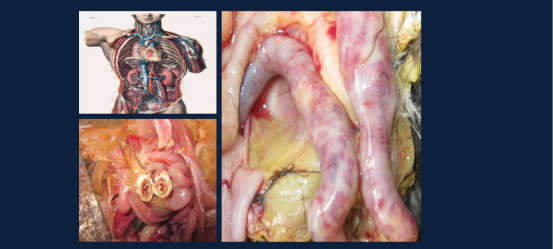
One great scientist said, to understand orthopaedic medicine, one must first understand anatomy, and to understand anatomy, one must first understand its history and development. Medical records of anatomy began from Hippocrates, a famous ancient Greek doctor, who believed that the heart had two chambers and two chambers. Aristotle, another Greek scholar, did an animal dissection, suggesting that the heart is the center of blood circulation, and distinguishing nerves from tendons, but he mistakenly applied the results of animal dissection to the human body. And, ancient Greek medical scientist Herophilus, he found and named " duodenum," he named "prostate", "the ciliary body", "retina", "lacteal and lymphatic", studying the liver and pancreas, and female uterus and fallopian tubes. Galen's Classic of Medicine was an authoritative masterpiece of Western medicine before the 16th century. There were many anatomical records in the book, such as clear records of blood flow, nerve branches and other organs. However, because the information was mainly from animal anatomy, there were still many mistakes. From 15th to 16th century, European Renaissance period, anatomy has a vigorous development, such as Leonardo Da Vinci had studied more than 30 corpses, filling human body pipe with wax, thus proving that blood vessels originates from the heart. Also, the atlas of human bone anatomy he made was an epoch-making masterpiece. Andreas Vesalius was the founder of the modern anatomy, he personally engaged in human body anatomy, finally in 1543 published the "human body", which systematically corrects the errors of popular argument, creating a new way for the development of medicine. In the 17th century, William Harvey first proposed that the cardiovascular system is a closed system of pipes, which had a huge impact to make anatomy into an independent discipline. In the 19th century, Darwin's "Origin of Species", and other great works were published, which established a new theory about human origin and evolution, and made the exploration of human body morphology and structure. The influence of these masterpieces has been continued to this day. The invention of the Electron Microscope in the 20th century brought morphological research, reaching the cellular and subcellular levels and the molecular level. The development of morphological science is gradually expanded with the continuous progress of new technologies and the continuous appearance of innovative methods, forming three different stages marked by macroscopic anatomy, microscopic anatomy and ultrastructural anatomy. With the development of science and technology and the improvement of research methods, the application of X-ray in medicine keeps pace with the times. X-ray computed tomography drives the progress of the sectional anatomy. Morphological structure and mechanics principle is used to analyze the skeleton, the basis of the principle of fluid mechanics research of cardiovascular morphology is along with the development of medicine to put forward the new requirements of anatomy. As a leading medical implants company in China,Double Medical supply professional orthopedic surgical solutions, if you 're intested in more orthopaedic medicine knowledge, follow us and welcome to visit our website:www.doublemedicalgp.com.